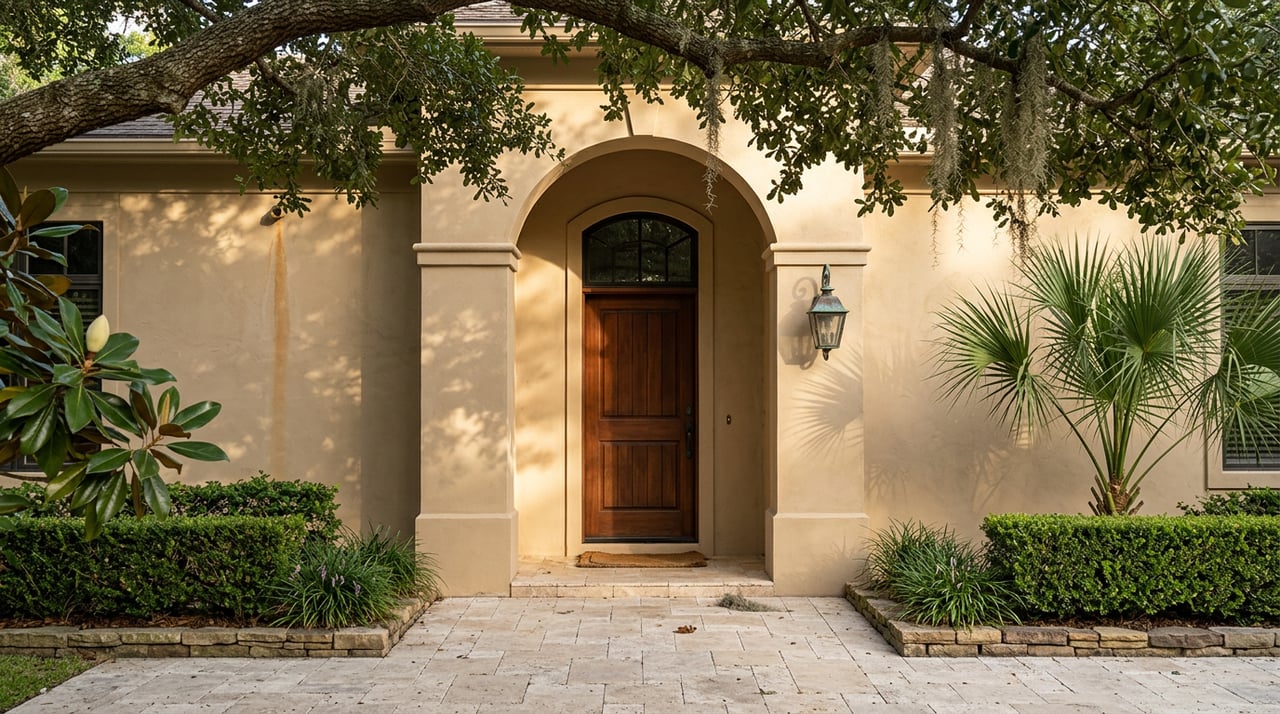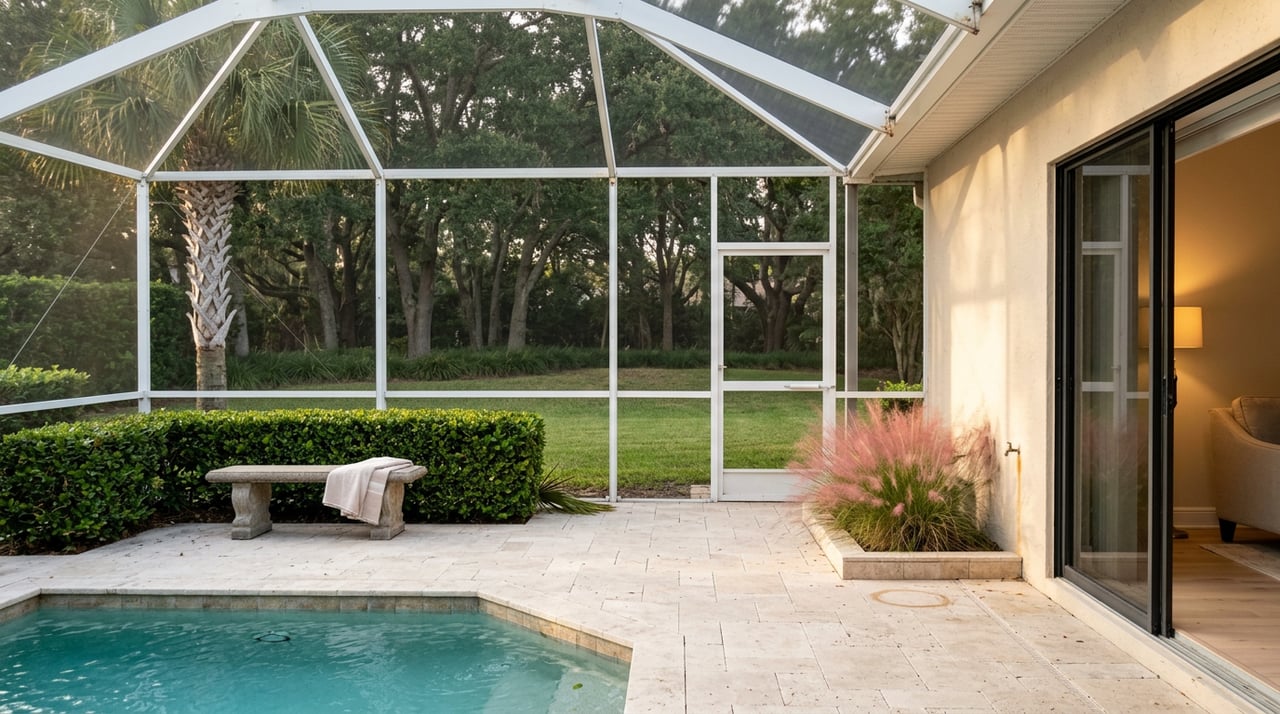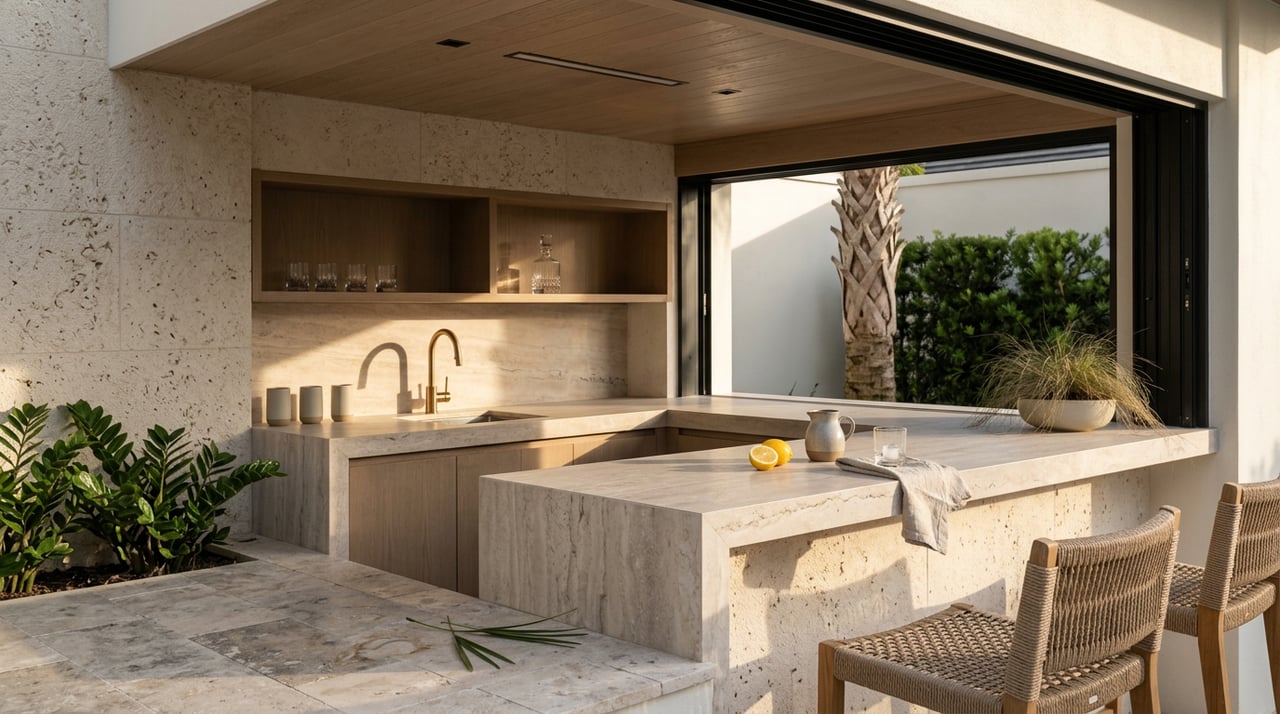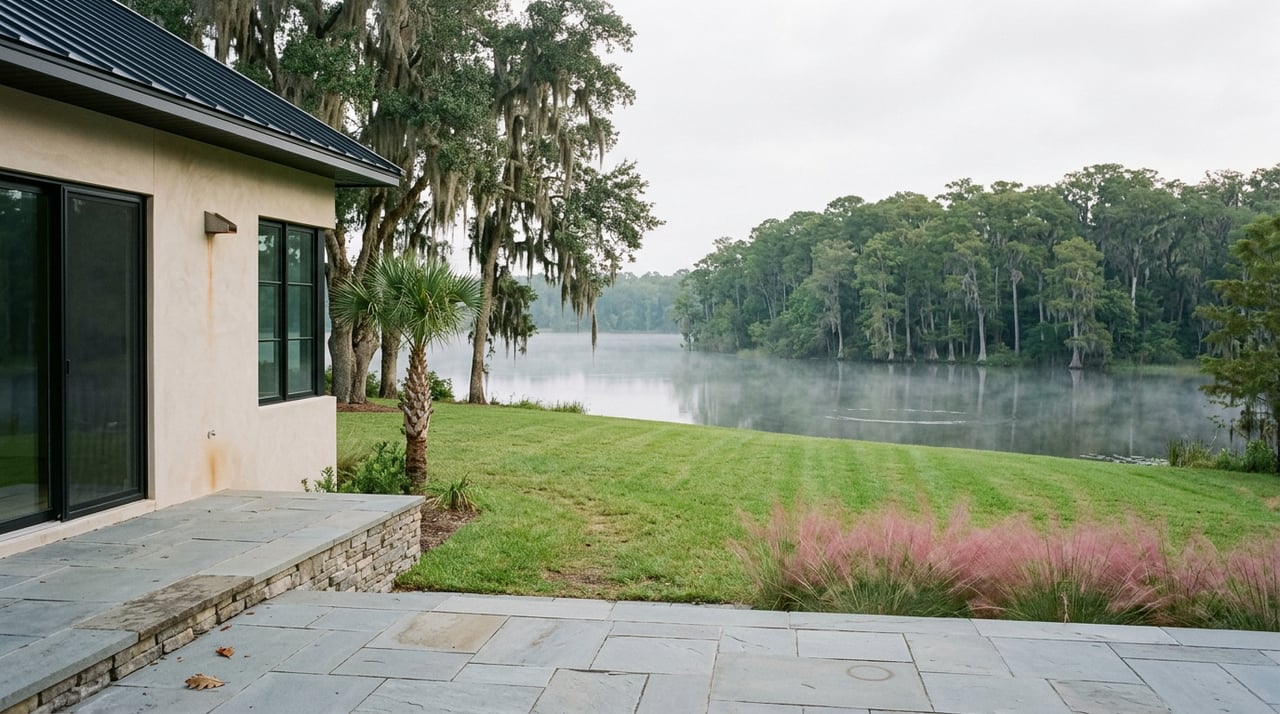
A buyer touring Pablo Creek Reserve for the first time usually asks the same question somewhere around the third house: which tee times come with this one. The community sits gated off San Pablo Road, wraps around lakes and preserve, and shares a property line with a golf course that has quietly ranked among Florida's best for decades. It is a reasonable question to ask. It is also the wrong question, and the answer changes how you should think about what you are paying for here.
Pablo Creek Reserve does not include the golf course. It never did. The 400-acre residential community and the golf course next to it are two entirely separate operations that happen to share a name, a fence, and very little else.
The Club Isn't Part of the HOA
Pablo Creek Club opened for play in 1996, designed by Tom Fazio for a membership that valued a quiet, golf-only experience over a resort feel. The founding family behind it built its reputation on the Winn-Dixie grocery chain, and the club they created has stayed deliberately low-profile ever since. It has ranked among Golf Digest's Best in State courses in multiple cycles, and PGA Tour pro Jim Furyk is known to practice there. None of that access transfers with a deed next door.
Membership at Pablo Creek Club works the way membership at most intensely private clubs works: a current member has to sponsor you. There is no waitlist you can join by buying real estate, no bundled social membership that comes standard with a Pablo Creek Reserve address, and no HOA line item that quietly covers your greens fees. If you want in, that is a conversation you have with the club directly, not a box you check at closing.
This matters because three of the gated communities Pablo Creek Reserve gets cross-shopped against, Glen Kernan, Marsh Landing, and Jacksonville Golf and Country Club, all structure ownership differently. In those neighborhoods, club access or an equity membership is often woven into the purchase itself. In Pablo Creek Reserve, it is not. A buyer moving between these communities without checking that detail first can end up surprised at the closing table, or worse, disappointed six months after moving in.
What the HOA Actually Restricts
The absence of golf access is not an oversight. It is consistent with how the whole community was designed. Pablo Creek Reserve has no clubhouse, no community pool, and no tennis courts. The homeowners association's own rules go further than most buyers expect: above-ground pools and hot tubs are not permitted anywhere in the community, full stop, and any exterior change, from shutter color to landscaping, still runs through an architectural review board before it happens.
The tradeoff is real privacy and real land. Homesites here run from Cottage lots, generally producing homes in the 3,000 to 5,000 square foot range, up to Estate lots that can carry homes past 9,000 or even 10,000 square feet. Miles of walking trails, a network of lakes, and a 4.5-acre central park replace the clubhouse model entirely. For a buyer who wants quiet over programming, that is the entire pitch. For a buyer who wants Saturday tee times built into their HOA dues, it is the wrong community, no matter how good the golf course two hundred yards away happens to be.
What $625 a Square Foot Is Actually Buying
Recent MLS-based figures from late May 2026 put the average asking price in Pablo Creek Reserve near $625 per square foot, with listings clustered around 5,000 square feet. As of mid-July 2026, six homes were on the market priced between roughly $1.9 million and $4.5 million. Those numbers track with what the community is actually selling: custom-build freedom on oversized lots close to Jacksonville's Southside employment corridor, not a bundled country club lifestyle.
That location detail carries real weight. Pablo Creek Reserve sits about two miles from Mayo Clinic Jacksonville, a draw for physicians and executives who want a short, predictable commute. It's also close enough to J. Turner Butler Boulevard to put St. Johns Town Center's shopping and dining within a short drive, without living inside the noise of it. Homes here have been built by a mix of custom builders, including Arthur Rutenburg Homes, Collins Builders, Starr Custom Homes, and Whitehurst Builder, along with owners who purchased a lot and brought in their own architect. That flexibility, more than any amenity package, is what a Pablo Creek Reserve price tag is buying.
Here's how the two lot tiers typically compare:
| Lot Type | Typical Home Size | What It Buys |
|---|---|---|
| Cottage Lots | Roughly 3,000 to 5,000 sq ft | Lower-maintenance footprint, still fully custom, closer to central park and trails |
| Estate Lots | Roughly 5,000 to 10,000+ sq ft | Larger wooded or lakefront homesites, more architectural latitude, higher price ceiling |
Two homes listed at a similar price point can sit on very different lot types, which changes both the resale ceiling and the day-to-day feel of ownership. Worth asking about specifically before you write an offer, not after.
The Fee Nobody Can Quite Agree On
If you search for Pablo Creek Reserve's HOA dues, you will find conflicting numbers. Some public listing sources cite figures in the $400 to $500 per month range. Others cite a much lower annual figure closer to $2,500 to $3,000 per year. That gap is too wide to be a rounding error, and it is a good example of why HOA figures pulled from a general listing site should never be the number you budget against.
The community is professionally managed by Marsh Landing Management Company, and dues are billed quarterly. Before writing an offer, ask your agent to pull the actual current HOA budget and the most recent estoppel information rather than relying on whatever figure shows up in a portal search. It takes one phone call and it is the only way to know what you are actually agreeing to pay.
One number is not in dispute: Pablo Creek Reserve carries no CDD assessment. That distinguishes it from many of Northeast Florida's larger master-planned communities, where a Community Development District bond adds a separate, decades-long charge on top of the property tax bill to repay the infrastructure that built the neighborhood in the first place. In a CDD community, a home with a modest-looking HOA fee can still carry a real annual bond payment that only shows up once you read the tax bill closely. In Pablo Creek Reserve, once you confirm the HOA number, you have the full picture. That is worth something to a buyer trying to compare all-in carrying costs across several gated communities at once, rather than comparing sticker prices alone.
If You Actually Want the Golf
None of this means the golf course is irrelevant to a buyer's decision, only that it is a separate financial decision from the real estate. Membership at Pablo Creek Club is intensely private and sponsor-based, and reported figures put initiation costs in the six-figure range with annual dues estimated around $20,000 to $30,000. Those numbers are not published by the club itself, so treat them as a planning range rather than a quote, but they are consistent enough across sources to be useful for budgeting purposes.
If proximity to that kind of golf experience is the draw, it is worth pursuing on its own terms, through a member introduction, rather than assuming a Pablo Creek Reserve closing gets you any closer to a tee time.
Frequently Asked Questions
Does every home in Pablo Creek Reserve back up to the golf course? No. Homesites are spread across wooded, lake, and preserve frontage, with only a portion bordering the golf course property itself. Golf course adjacency, where it exists, does not carry any playing rights.
Is there a public way to play Pablo Creek Club? The club operates as a private facility. Access typically requires a member sponsor rather than a public tee sheet.
What is a CDD, and why does it matter here? A Community Development District is a Florida special-purpose government entity that finances a community's infrastructure through bonds repaid via a separate assessment, usually billed with the property tax bill. Pablo Creek Reserve does not have one, which means the HOA figure you confirm before closing is close to the full recurring cost, unlike in many CDD-bearing communities nearby.
Comparing Pablo Creek Reserve against Glen Kernan, Marsh Landing, or a CDD-heavy neighborhood across town takes more than a spreadsheet of asking prices. It takes knowing which costs are bundled, which are optional, and which one phone call to the HOA management company can settle before you're under contract. That is the kind of groundwork worth doing with someone who already knows where the numbers tend to disagree.
If you're weighing a move into Pablo Creek Reserve or comparing it against another Northeast Florida gated community, Sharon Mills can walk through the real cost structure, lot-by-lot, before you write an offer.