Wondering why two oceanfront homes on the same stretch of sand can sell for very different prices? In Jacksonville Beach, small details about your lot, elevation, and beach access can outweigh flashy finishes. Whether you plan to sell soon or want to protect long-term value, understanding what buyers and appraisers prioritize will help you make smart decisions. In this guide, you’ll learn the factors that reliably drive resale for Jacksonville Beach oceanfront homes and how to position your property to stand out. Let’s dive in.
Lot and site traits
Your lot is the foundation of value on the oceanfront. Finite supply and strict rules make site characteristics the top driver of resale.
Frontage and orientation
Wider ocean frontage often commands a premium because it delivers broader panoramic views and stronger privacy. Orientation also matters. The way your home faces the water affects sun exposure, wind, and lateral coastline sightlines, which influence buyer experience and appraisal support.
Elevation above BFE
Homes that meet or exceed Base Flood Elevation with elevated living areas reduce perceived risk and can lower flood insurance costs. In coastal V or VE zones, raised foundations and engineered systems are not just smart, they are often required. Properties with clear Elevation Certificates and compliant construction are easier to finance and resell.
Dune and beach width
A healthy dune and stable beach are value multipliers. Jacksonville Beach benefits from periodic shoreline renourishment, which increases beach width and reinforces dune buffers. Nearby projects that add sand and restore dunes improve recreational appeal and reduce short-term erosion risk, which supports resale.
Rules that shape value
Regulations determine what you can build, rebuild, or improve. Buyers and lenders look for a clear, compliant path forward.
FEMA flood zones
Many oceanfront parcels fall within Special Flood Hazard Areas, commonly AE or VE zones. These zones carry higher elevation standards and typically require flood insurance for financed purchases. Properties that already conform to current floodplain rules are more marketable.
Florida’s CCCL line
Florida’s Coastal Construction Control Line program regulates construction seaward of the CCCL. New or substantially improved structures in this area must meet siting and elevation standards. Understanding where your lot sits in relation to the CCCL helps set realistic expectations for additions, rebuilds, and permitting timelines.
Local zoning limits
Jacksonville Beach’s Land Development Code sets lot coverage, setbacks, and height caps, with many residential districts capped near 35 feet. Oceanfront-specific yard and accessory rules also apply. A clear summary of what is allowed on your lot can increase buyer confidence and investor interest.
Short-term rental rules
Short-term rentals are permitted in Jacksonville Beach but require registration, inspections, and a business tax. For investors, documented compliance and a clean inspection record help validate income potential and support resale value.
Insurance and costs
Carrying costs influence the buyer pool. Clear documentation and mitigation features can keep deals on track.
Citizens flood changes
Recent Florida insurance reforms introduced phased flood-insurance requirements for Citizens policyholders based on property value thresholds. Higher-value oceanfront homes may face mandatory flood coverage, which increases ownership costs. Buyers factor these costs into offers, and lenders may require evidence of mitigation to approve loans.
What lenders require
Expect requests for an Elevation Certificate, roof age, and proof of impact-rated openings or other mitigation features. Homes that present a straightforward insurance path and lower risk profile tend to sell faster and closer to list price.
Features buyers reward
Certain finish choices and systems consistently command premiums on the oceanfront:
- Unobstructed ocean views and smart view preservation
- Direct or deeded beach access, or a short, defined walk
- Elevated living areas, pilings, and raised garages
- Impact-rated windows and doors, durable roofing, and corrosion-resistant materials
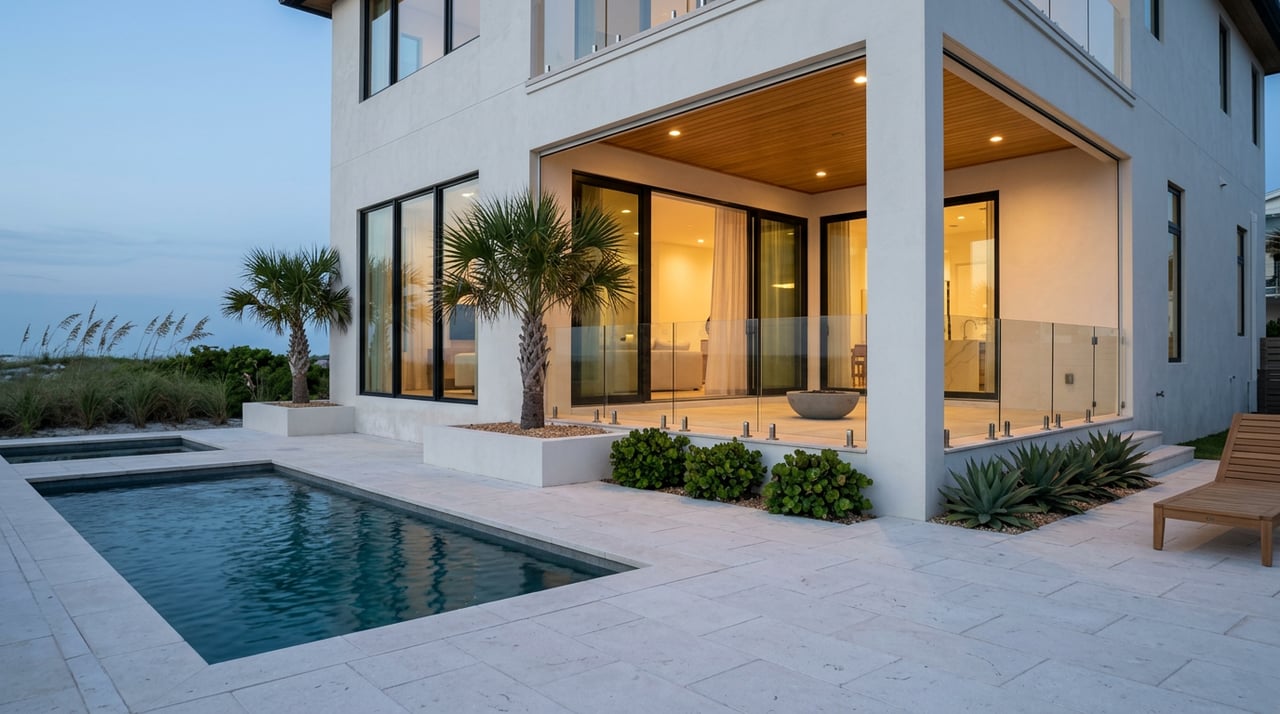
- Covered porches, wind-smart decks, and outdoor showers for usable coastal living
- Off-street parking, garages, and elevators in multi-level homes
- Updated systems, including elevated electrical, generator hookups, and coastal-rated HVAC
Location and amenities
Proximity still matters. Convenience and lifestyle features help justify higher pricing.
Pier and Town Center
Being near the Jacksonville Beach Pier or Beaches Town Center increases day-use appeal and rental demand. Buyers often pay more to be close to restaurants, the boardwalk, and community events.
Daily convenience
Access to grocery stores, services, and parking options can tip the scales for primary-home buyers. Simple, practical advantages support stronger offers.
Seller prep checklist
Use this priority list to position your oceanfront home for top resale:
- Elevation and documentation
- Obtain a current Elevation Certificate. Make elevated living areas easy to understand in photos and tours.
- Views and access
- Showcase unobstructed ocean views and any deeded or direct access. Provide clear floor plans and view corridors.
- Resilient upgrades and systems
- Highlight impact windows and doors, a roof within the last 10 to 15 years, corrosion-resistant exterior materials, and coastal-rated HVAC.
- Outdoor living that lasts
- Emphasize covered porches, wind-smart decks, and simple storm prep features. Include maintenance notes.
- Permits and compliance
- Organize CCCL correspondence if applicable, floodplain paperwork, and short-term rental registration and inspection records.
- Dune and beach condition
- Note the timing of recent renourishment and any dune stabilization adjacent to the property.
- Redevelopment potential
- Summarize zoning, allowable lot coverage, and height. Many districts cap height near 35 feet, which guides future plans.
Market context
For broader perspective, recent snapshots across major portals placed the median sale price for Jacksonville Beach single-family homes in the range of about 588,000 to 705,000 dollars in early 2026. Oceanfront properties trade at a premium within that context, with pricing sensitivity tied to elevation, dune stability, and insurance costs.
On the shoreline, the 2024 Duval County renourishment placed roughly 1.29 to 1.3 million cubic yards of sand along the Jacksonville Beaches. This work increased near-term beach width and supported dune buffers, both of which contribute to buyer confidence and help sustain resale values. Renourishment is periodic, so it is smart to track schedules and recent placements when marketing an oceanfront home.
Next steps
If you are considering a sale or want a clear plan to protect long-term value, start with two items: verify your elevation and pull together your permits and compliance records. From there, a targeted set of resilient updates and crisp marketing that showcases views, access, and outdoor living can make a meaningful difference in days on market and final price.
When you are ready, connect with Sharon Mills for a tailored pricing and presentation plan grounded in Jacksonville Beach’s coastal rules, buyer demand, and design-forward marketing.
FAQs
Do seawalls raise value for Jacksonville Beach oceanfront homes?
- It depends. On many natural beaches hard armoring is limited or discouraged, and any seawall requires permits. While a seawall can protect a parcel short term, it can worsen adjacent erosion. Value impact varies with permits, maintenance, and the stability provided by periodic renourishment.
What matters more for resale, elevation or square footage on the oceanfront?
- Elevation often outweighs raw square footage in AE or VE zones. Meeting or exceeding Base Flood Elevation improves insurance options and lender comfort, which supports stronger offers.
How does beach renourishment affect my home’s resale?
- Renourishment increases beach width and reinforces dunes, which improves recreational value and reduces short-term erosion risk. This generally supports demand and near-term resale, but it is not a permanent guarantee and occurs on cycles.
How are insurance changes in Florida influencing oceanfront sales?
- Reforms tied to the Citizens program are phasing in flood-insurance requirements based on policy value. For higher-value oceanfront homes, required flood coverage raises carrying costs and can narrow the buyer pool if private options are limited.
What short-term rental rules apply in Jacksonville Beach, and do they affect value?
- Short-term rentals are allowed with registration, inspections, and a business tax. Documented compliance and clean inspections help validate income potential, which supports investor demand and resale value.