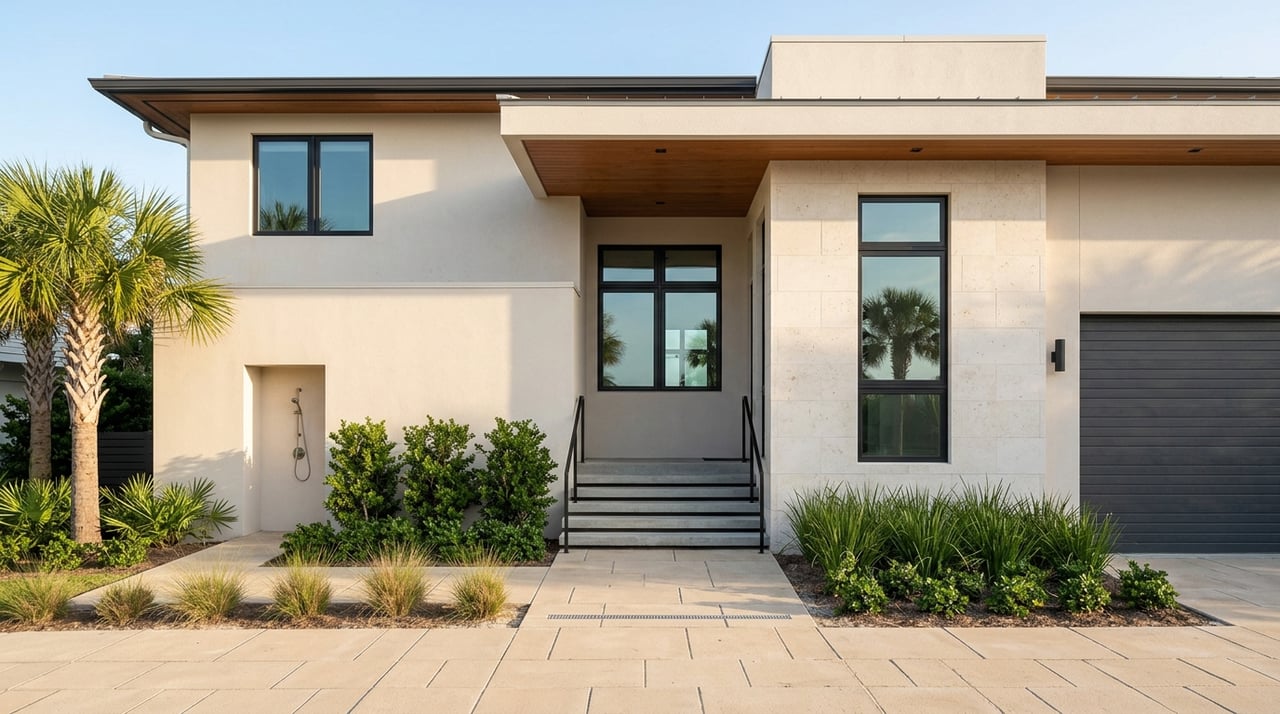
Wondering whether oceanfront living in Jacksonville Beach is worth the premium, or if a home a few blocks inland gives you the better everyday lifestyle? It is a smart question, especially when both options can put you close to the sand but lead to very different costs, routines, and ownership experiences. If you are comparing beachfront condos, townhomes near the ocean, or single-family homes just off the water, this guide will help you think through the tradeoffs with more confidence. Let’s dive in.
Oceanfront and nearby living feel different
At first glance, the choice may seem simple: direct ocean views versus being a little farther back. In real life, the difference is more nuanced. Jacksonville Beach offers a spectrum of coastal living, from true oceanfront properties on or near Ocean Dr S and 1st St S to homes just a few blocks inland that still keep you close to public beach access.
Oceanfront living usually delivers the strongest vacation-style experience. Current oceanfront condo marketing in Jacksonville Beach highlights features like sunrise views, ocean breezes, large balconies, and private beach access. If you want the beach to feel like part of your daily living room, that can be hard to replicate.
Nearby living still gives you a coastal lifestyle, just with a different rhythm. Some homes are described as only blocks from the ocean, while others place beach access about a mile away. Because Jacksonville Beach maintains many public beach access points and public bathrooms, being off the oceanfront does not automatically mean giving up convenience.
Beach access matters more than you think
One of the biggest mistakes buyers make is focusing only on whether a property is technically oceanfront. In Jacksonville Beach, access can matter almost as much as address. A home a few blocks inland may still let you walk or bike to the beach with relative ease.
That matters because Jacksonville Beach is described as moderately walkable. For many buyers, that opens up a lifestyle where you can reach the beach, local stops, and daily errands without always relying on a car. If your goal is a flexible beach routine rather than direct sand frontage, nearby homes may check more boxes than you expect.
When comparing homes, it helps to ask one simple question: how does this property connect to the beach in everyday use? A short, comfortable route to a public access point can make a nearby home feel much closer to the water than a map alone suggests.
Oceanfront often brings a stronger lifestyle premium
If your top priority is an immersive coastal experience, oceanfront living usually stands out right away. You are paying for direct views, immediate access, and a front-row seat to the shoreline. For many buyers, that emotional value is real and worth the extra cost.
The premium often shows up most clearly in view quality and price per square foot. One active oceanfront condo at 1601 Ocean Dr S #408 is listed at $745,000 for 1,110 square feet, or about $671 per square foot. At the higher end, Redfin estimates 1031 1st St S #205 at about $1.73 million, or roughly $710 per square foot.
That does not mean every oceanfront home has a dramatically higher total price than every nearby home. In Jacksonville Beach, absolute price can overlap depending on property type, size, and condition. A larger nearby home or townhome may fall into a similar total price range, even if its price per square foot is lower.
Nearby homes can offer more flexibility
For many buyers, nearby living works better because it often gives you more usable space and a more practical setup. Homes off the water may offer garages, yards, and layouts that support full-time living more comfortably. If you want a beach address without the intensity of direct surf-side exposure, this can be a strong middle ground.
Recent examples help show the spread. A new townhome at 720 2nd Ave N sold for $650,000 at about $376 per square foot, while 1637 2nd Ave N sold for $600,000 at about $412 per square foot. Compared with the oceanfront examples, the difference suggests that nearby living can deliver more interior space for the money.
That balance is often attractive for relocation buyers and lifestyle buyers who want coastal access but also want practical daily function. You may still be close enough for morning walks on the beach, but with easier parking, more storage, and potentially fewer building-level costs.
Maintenance changes near the ocean
The closer you get to the shoreline, the more maintenance becomes part of the ownership equation. Coastal conditions in Florida bring wind, salt, and sandy high-pH soils. According to UF/IFAS, sea spray and salty soils can damage plants, and even lawns near the ocean may require more careful planning.
For landscaping, UF/IFAS recommends salt-tolerant plants within about one-eighth of a mile of the coast. It also notes that St. Augustinegrass and zoysia are generally the best home-lawn choices because they can handle some salt spray. If you are considering a home with outdoor space very close to the ocean, those details matter more than many buyers expect.
This does not mean nearby homes are maintenance-free. It does mean oceanfront and very near-ocean properties usually face more direct exposure. Over time, that can affect how you think about exterior upkeep, landscaping choices, and the long-term care of the property.
Rules can be more complex on oceanfront parcels
Oceanfront ownership can also come with an added layer of regulation. In Florida, the Coastal Construction Control Line program regulates structures and activities that can contribute to beach erosion, destabilize dunes, damage upland properties, or interfere with public access. Special siting and design criteria apply seaward of that line.
For buyers, this matters most when you start thinking beyond the existing home. If you hope to make exterior changes, additions, or major improvements, an oceanfront parcel may involve a more complex path than a similar home farther inland. That does not make oceanfront ownership a bad choice, but it does make due diligence more important.
A useful question to ask early is whether the parcel is seaward of the Coastal Construction Control Line. Knowing that upfront can help you understand what future flexibility may look like before you commit.
Condo dues and carrying costs can shift the equation
Price is only part of the story. Your monthly and long-term carrying costs can look very different depending on whether you buy an oceanfront condo or a nearby detached home or townhome. In many cases, the structure of those costs matters just as much as the amount.
For example, the active Seascape oceanfront condo lists HOA dues of $1,266.71 per month and notes a $7 million building renovation completed in 2025. That is not unusual for an oceanfront building where major maintenance and improvements are shared at the association level.
By contrast, nearby detached and townhome listings often advertise no HOA or no rental restrictions. That does not automatically make them less expensive to own, but it does highlight a different cost structure. With oceanfront condos, more of the maintenance burden may be folded into dues and building-level expenses.
Jacksonville Beach price patterns in context
It helps to start with the broad market before comparing individual streets. Redfin’s Jacksonville Beach oceanfront search currently shows 7 homes with a median listing price of $729,000. Redfin’s broader Jacksonville Beach market page shows an April 2026 median sale price of $654,662.
That gap is meaningful, but it is not huge. One reason is that pricing in Jacksonville Beach depends not just on location, but also on product type. A smaller oceanfront condo and a larger nearby home may sit in a similar price band while delivering very different lifestyles.
This is why a side-by-side comparison matters more than a headline number. If you focus only on purchase price, you may miss the more important differences in size, access, maintenance exposure, and monthly carrying costs.
How to choose the right micro-location
The best choice usually comes down to how you want to live, not just how close you want to be to the water. Oceanfront tends to fit buyers who want uninterrupted views, immediate access, and a true beachfront routine. Nearby living tends to fit buyers who want a coastal address with more interior space, easier parking, and potentially lower ongoing upkeep or a more flexible ownership structure.
A practical framework can help you compare options:
- Measure the distance to the nearest public beach access
- Ask whether the parcel is seaward of the Coastal Construction Control Line
- Review HOA dues, reserves, and any special assessments if the property is in a condo or townhome community
- Look closely at the flood and insurance picture for the specific address
- Compare price per square foot alongside total purchase price
- Think about how often you will realistically use the beach from that location
In Jacksonville Beach, this decision is rarely just oceanfront versus not oceanfront. It is more about where a property sits on the spectrum of access, upkeep, and carrying cost. When you look at it that way, the right fit often becomes much clearer.
If you are weighing beachfront living against a nearby home in Jacksonville Beach, a property-by-property comparison can save you time and sharpen your decision. For tailored guidance on the Beaches market, connect with Sharon Mills.
FAQs
What is the main difference between oceanfront and nearby living in Jacksonville Beach?
- Oceanfront living is usually about direct views, immediate beach access, and a stronger vacation feel, while nearby living often offers more space, easier parking, and a different cost structure while still keeping you close to the beach.
Are nearby homes in Jacksonville Beach still close to beach access?
- Yes. Jacksonville Beach maintains many public beach access points and public bathrooms, so homes a few blocks inland can still offer convenient beach access.
Is oceanfront property in Jacksonville Beach always much more expensive?
- Not always in total price. Oceanfront properties often command a higher price per square foot and a premium for views and direct access, but larger nearby homes can overlap in total purchase price.
Do oceanfront homes in Jacksonville Beach require more maintenance?
- In many cases, yes. Properties near the shoreline face more exposure to wind, salt, and sandy coastal conditions, which can affect landscaping and exterior upkeep.
What local rule should buyers check for oceanfront property in Florida?
- Buyers should ask whether a property is seaward of the Coastal Construction Control Line, because that can affect how exterior changes, additions, and improvements are regulated.
Are HOA costs higher for oceanfront condos in Jacksonville Beach?
- They can be. One active oceanfront condo example lists monthly HOA dues of $1,266.71, showing how oceanfront buildings may carry significant shared maintenance and renovation costs.
How should you compare oceanfront and nearby homes in Jacksonville Beach?
- Compare beach access, price per square foot, total purchase price, HOA or maintenance costs, regulatory constraints, and the flood and insurance picture for each specific address.