If you love the idea of keeping your boat close to home, Queen’s Harbour offers a setup that stands out in Jacksonville’s 32225 area. But boat-friendly living here is about more than a water view or a dock out back. You need to understand how the lock works, which homes can support private docks, and what marina access really looks like before you buy. This guide walks you through the boating lifestyle, the practical details, and the questions to ask so you can decide whether Queen’s Harbour is the right fit for you. Let’s dive in.
Why Queen’s Harbour Appeals to Boaters
Queen’s Harbour Yacht and Country Club is a gated waterfront community with about 1,000 single-family homes. Official community materials describe it as bordered by the St. Johns River, Greenfield Creek, and the Intracoastal Waterway, which gives the neighborhood a strong connection to life on the water.
What makes this community different is that boating is only part of the story. Queen’s Harbour is also presented as a full residential environment with country club options, golf, tennis, dining, and 26 miles of landscaped roadways. If you want a neighborhood where boating works alongside other lifestyle amenities, that balance is a big part of the appeal.
Understand the Three Main Boating Setups
Before you focus on finishes, floor plans, or lot size, it helps to understand how water access works here. In Queen’s Harbour, your boating experience often falls into one of three categories.
Lagoon-front homes
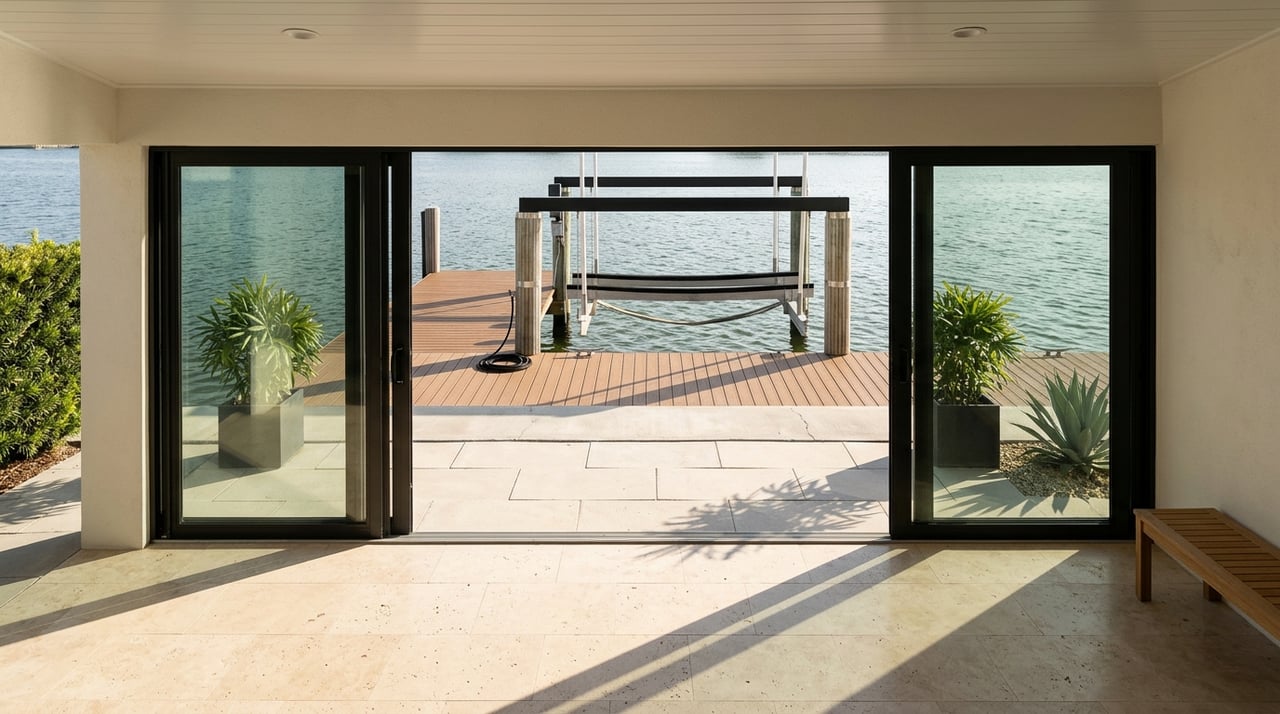
Lagoon-front homes may offer the most direct boating convenience. Community materials note that these homes can have private docks, which means your boat may be accessible right from your backyard depending on the property and approvals.
For many buyers, this is the most seamless option. It can simplify day-to-day use and make spontaneous time on the water much easier.
Marina-oriented homes
Not every boater in Queen’s Harbour needs a private dock. The community marina provides a separate access option for residents, which can be a strong fit if you want the neighborhood boating lifestyle without needing direct dockage at home.
The marina is described as a secure, gatehouse-controlled facility with 65 slips, fixed concrete docks, and 30- and 50-amp power. It also offers resident-rentable personal watercraft ports plus storage racks for canoes, kayaks, and paddleboards near the lock.
Non-waterfront homes
You do not have to own a waterfront lot to enjoy boating in Queen’s Harbour. Some buyers choose interior homes and use marina access, small-craft storage, or optional social boating groups to stay connected to the water.
That can be especially appealing if your priorities include neighborhood setting, home design, or club lifestyle in addition to boating. It gives you another way to enjoy the community without narrowing your home search only to waterfront lots.
The Lock System Matters
One of the most important features in Queen’s Harbour is the boating system built around the 110-foot lock. This is central to how boats move between the protected lagoon system and open water routes.
For buyers coming from more traditional waterfront neighborhoods, this is a major difference. Instead of simply backing out from a dock into tidal water, you need to think about how the lock shapes your timing and routine.
What the lock adds to daily life
The community’s official materials describe the lagoon as non-tidal and averaging 8 feet or more in water depth. That can create a more controlled environment for keeping and using your boat within the neighborhood.
The same materials also note unobstructed overhead access for watercraft with fishing towers and tall masts. If vessel height is part of your search criteria, that is a meaningful feature to confirm early.
What happens after lock hours
Just outside the lock, the community provides a 120-foot floating dock with shore power, water, and a fish-cleaning station. This dock is intended for fishermen and for boaters returning after lock hours.
That detail may sound small, but it can be very practical. If you fish offshore or stay out later than planned, having a place to return to just outside the lock adds flexibility to the boating experience.
Open-water timing still counts
Even though the lagoon itself is non-tidal, open-water conditions still matter once you leave the protected system. The lock information directs users to NOAA tide predictions, which shows that timing remains part of trip planning beyond the neighborhood.
For you as a buyer, the takeaway is simple: Queen’s Harbour offers protected in-community water access, but boating logistics still involve real-world planning once you head toward the Intracoastal Waterway and beyond.
Can Your Boat Fit Here?
This is one of the most important questions to answer before you buy. A community can be beautiful on paper and still fall short if your vessel does not work well with the neighborhood’s docking and navigation setup.
Official materials state that the lagoon, lock, and marina provide overhead clearance for fishing towers and tall masts. The marina also describes slip capacity up to 100 feet, which makes Queen’s Harbour especially relevant if you are searching with a larger or taller vessel in mind.
That said, fit is about more than length alone. You will also want to think about how you prefer to use your boat, whether you want dockage at home, and how often you expect to move through the lock.
Private Docks: What Buyers Need to Know
It is easy to assume every waterfront home works the same way, but that is not the case in Queen’s Harbour. Dock possibilities depend on the lot type and the approval process.
Lagoon-front properties
Lagoon-front homes may support private docks, which is one of the strongest lifestyle draws in the neighborhood. If that feature is high on your list, you will want to confirm not only that a dock exists, but also what kind of dock setup is currently approved on the property.
This matters if you plan to add equipment, replace structures, or tailor the setup to your vessel. A pretty shoreline is not the same thing as practical, approved dockage.
Marsh-front properties
Marsh-front properties involve more complexity. Community materials note that marsh-front docks and bulkheads require jurisdictional permits and approved plans in addition to ARB materials.
For you, that can affect cost, timing, and overall feasibility. If you are comparing two waterfront homes, this distinction alone may make one property far more practical than the other.
ARB Rules Shape the Buying Decision
In Queen’s Harbour, dock work is regulated through the community’s governing structure rather than handled informally from lot to lot. The association states that its governing documents and policies are centralized and standardized, which gives buyers a clearer framework but also means changes require process and documentation.
The current ARB quick-reference guide includes separate submission categories for drive-on docks, floating docks, dock lifts, mooring whips, and kayak, canoe, and paddleboard racks. It also calls for items such as a scaled survey, photos of the existing dock, and product brochures or pictures.
This is important because future flexibility is part of value. If you buy with plans to modify a dock or add shoreline equipment, you should evaluate not only the home itself but also the approval path you may need to follow.
Access to the Intracoastal and Atlantic
Queen’s Harbour’s spring-fed lagoon connects to the Intracoastal Waterway, which gives residents a practical route beyond the neighborhood. Community materials place the Mayport inlet sea buoy about 8 miles away.
For many buyers, that means Queen’s Harbour offers a protected interior-waterway setting with workable access toward the Atlantic. If you enjoy both inshore cruising and broader boating routes, that combination can be a major advantage.
Boating Culture Beyond Dockage
A boat-friendly community is not only about slips and shoreline features. It is also about whether the neighborhood supports the lifestyle socially and practically.
Queen’s Harbour highlights both the Queen’s Harbour Yacht Club and the Harbour Sailing Club. The Yacht Club is open to residents, country club members, and marina slip lessees, and the community notes that owning a boat is not required.
The Sailing Club also offers youth and adult programming at the marina, including sailing instruction and summer activities. For buyers who want a boating-centered environment without making every decision about ownership or dockage on day one, this adds another layer of appeal.
Smart Questions to Ask Before You Buy
When you tour homes in Queen’s Harbour, boating questions should be as specific as your home questions. A polished kitchen or attractive pool matters, but so do the details that shape how well the property supports your life on the water.
Consider asking:
- Is the home lagoon-front, marina-oriented, or non-waterfront?
- Does the property currently have a private dock, and what type is it?
- Are there any known approval requirements if you want to modify the dock setup?
- If the home is marsh-front, what permits and plans may be required?
- If you plan to use the marina, what access options fit your vessel and boating habits?
- How important is lock access to your day-to-day boating routine?
- Do your boat’s height and size align with the community’s lock, lagoon, and marina setup?
These questions can help you move from a general idea of waterfront living to a property choice that actually fits your lifestyle.
Why Local Guidance Matters
In a community like Queen’s Harbour, the right home is rarely just about square footage or curb appeal. It is about matching the property to the way you want to live, whether that means backyard dockage, marina convenience, or a broader country club lifestyle with boating built in.
That kind of decision benefits from neighborhood-specific guidance. When you understand the difference between lot types, approval paths, marina options, and lock logistics, you can buy with more confidence and fewer surprises.
If you are exploring boat-friendly living in Queen’s Harbour, Sharon Mills can help you evaluate the homes, waterfront setups, and neighborhood nuances that matter most.
FAQs
What makes Queen’s Harbour boat-friendly for homebuyers?
- Queen’s Harbour offers a non-tidal lagoon system, a 110-foot lock, a 65-slip marina, possible private docks on lagoon-front homes, and storage options for personal watercraft and small craft.
What types of homes in Queen’s Harbour offer the best boating access?
- Lagoon-front homes may offer private dockage, while other residents may use the community marina, depending on the property and boating needs.
What should buyers know about the Queen’s Harbour marina?
- The marina is a secure, gatehouse-controlled facility with 65 slips, fixed concrete docks, 30- and 50-amp power, resident-rentable PWC ports, and storage racks for kayaks, canoes, and paddleboards.
What should buyers know about private dock approvals in Queen’s Harbour?
- Dock-related work is regulated through the community’s ARB process, and submissions may require a scaled survey, photos, and product information depending on the project.
What is different about marsh-front docks in Queen’s Harbour?
- Marsh-front docks and bulkheads require jurisdictional permits and approved plans in addition to ARB materials, which can affect cost and timing.
What boating details matter when buying a home in Queen’s Harbour?
- You should confirm whether the home is lagoon-front, marina-oriented, or non-waterfront, and whether your vessel’s size, height, and day-to-day use fit the lock, lagoon, and marina system.
What kind of boating access does Queen’s Harbour offer beyond the neighborhood?
- The community’s lagoon connects to the Intracoastal Waterway, and community materials place the Mayport inlet sea buoy about 8 miles away, offering a practical route toward the Atlantic.